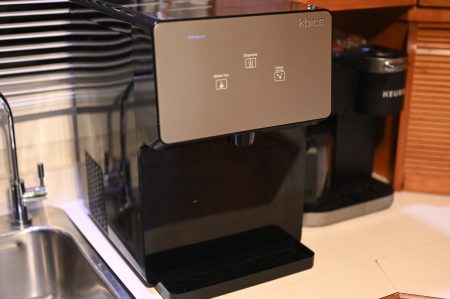



This past summer, I was so excited to enjoy the warmer weather.
I’m a big fan of the summer heat; I love sitting back with a nice cold beverage on my favorite chair. Life doesn’t get much better than this!
I wish that I had a built-in ice maker in my fridge, but I don’t. Instead of whining about it, I decided to take the plunge and purchase a portable ice maker for my home.
If you’re like me, you probably have some questions before you follow suit and get your own portable ice maker. I’ve answered the most common questions and concerns about buying one below. If your question isn’t answered here, add it to the comments.
The perfect Gift from GiftCards.com / Learn More Here
Updated October 2026: We’ve refreshed the prices, energy-cost math, and product examples in this guide for 2026.
What is a Portable (Countertop) Ice Maker?
A portable ice maker is a small appliance that sits on your countertop and makes ice, compared to one installed inside the freezer of your fridge. It’s normally small and compact and can easily be moved if need be.
Portable ice makers are common for those that go RVing or camping and don’t want to buy bags of ice regularly.
It’s also popular for those that do not have that fridge ice maker and still want to have ice for their home.
I used to buy big bags of ice and store them in my freezer. Having an ice maker that makes ice when you need it is so much better.
Do Portable Ice Makers Work Well?
I came into this purchase with a lot of skepticism. You always wonder whether it’s a good investment or a waste of money.
Do portable ice makers actually work or will it be another appliance on my countertop that I never use?
Portable ice makers work well. They do what they are supposed to do, and that is make ice. But portable ice makers are not freezers. A lot of people buy a countertop ice maker, see the ice slowly melting in the bin, and return it thinking it’s broken. That melting is normal.

Most portable ice makers don’t have a built-in compressor that keeps the ice frozen while it’s in the bin. They use an insulated basket to keep the ice frozen as long as possible.
I purchased the ice maker and set it up.
I filled it with water and turned it on. It worked great. It’s rated for up to 48 lbs of ice a day, and with the insulated basket, the ice is usually there when I need it.
How Do Portable Ice Makers Work?
Portable ice makers have a clever design that recycles the water, so you’re never wasting it.
Waste not, want not – right?
Water is pumped into a small tray, where metal prongs chilled by refrigerant dip into the water. Ice forms around these prongs until, after about six to ten minutes, you have bullet-shaped ice.
When the ice is ready, the prongs warm briefly to release it, and it drops and gets pushed into the ice basket.
When the ice melts, the water drains back into the main reservoir, where it’s used to make more ice.
There is no draining and no wasting.
Do Portable Ice Makers Use A lot of Electricity?
Most countertop ice makers draw roughly 100 to 200 watts while they’re making ice. Check the label or spec sheet on the model you’re considering.
For example, a 120-watt ice maker running for 8.33 hours uses 1 kilowatt-hour (kWh) of electricity.
At a typical U.S. rate of roughly 15 to 20 cents per kWh, that’s about 15 to 20 cents for a full day of ice making.
It’s very affordable to own a portable countertop ice maker, and if you’re not using it, you should unplug it anyway. There’s no point running the ice maker all day if you have no intention of using the ice.
How Do You Clean a Portable Ice Maker?
It’s amazing how dirty an ice maker can get. I have owned an ice maker for many years, and I find that just running it for several weeks will leave it grimy.
It’s best to give it a cleaning every couple of weeks to keep it running correctly and protect it from future damage.
Cleaning an ice maker is pretty straightforward, and it only takes about 5 minutes.
Take a damp rag and gently wash down the inside of the ice maker. If your ice maker is bulky and hard to handle you may need to scoop the water out so that you don’t make a mess.
You can use a portable ice maker cleaning solution mixed with the water during a cycle, or two cups of white vinegar will also do the trick. Check your owner’s manual first, since some manufacturers recommend their own descaler.

We do this to descale our ice maker. You want to make sure there is no buildup of calcium caused by hard water.
To make a natural cleaning spray for your ice maker, you can mix two cups of white vinegar, 2 tbsp of lemon juice, and one cup of water in a spray bottle and shake it around.
Use this solution to wash down your ice maker and get rid of any musty smells that may be lingering from usage. This is a perfect way to deodorize your ice maker as well.
That’s it. It’s not difficult to clean an ice maker, but those couple of minutes could protect your ice maker from damage down the road.
Are Portable Ice Makers Worth Buying?
I believe so.
Again, I have owned a portable ice maker for years and love it. I bring it upstairs in the summer and use it almost every day, then move it to the basement during the colder months, and still end up using it a lot.
It’s perfect for hosting special functions like birthday parties, family gatherings, and so many other events.
The option to have ice on demand is fantastic.
Usually, I’ll fill a bowl with ice and set it out for anyone who wants to scoop some into their drink. Most people like ice in their drink, so it adds a little luxury to the event.
Who Sells Portable Ice Makers?
Oh, Wow! That’s a great question.
You can find countertop ice makers at most big-box stores, home improvement stores, and online retailers. In the small appliance section, there should be a wide variety of options.
I purchased my ice maker on Amazon for an excellent price.
That model (a Frigidaire EFIC115) has become hard to find new in 2026, but Amazon still made it easy for me to compare ice makers and read owner reviews before buying.
What’s the best ice maker?
Finding the best ice maker is based on what you are looking to use your ice maker for.
If you would like more help buying that perfect ice maker, you can check out our buyer’s guide here.
If you are looking for an ice maker for camping, you’ll want a smaller unit.
If you want an ice maker for hosting large gatherings, then you’ll want an ice maker that has a large tray and water reservoir.
All of these characteristics are important, as well as the price.
Will A Portable Ice Maker Keep Ice Frozen?
This is a question I get a lot and a question that’s hard to answer.
The answer is yes and no.
Most portable ice machines use an insulated basket to keep the ice frozen. It isn’t perfect, and the ice will eventually melt, but it does a good job of keeping ice around longer, and the meltwater is reused to make more ice.
A few home ice makers do keep ice frozen, but they’re usually larger, more expensive machines. You can read about them in our guide to portable ice makers that keep your ice frozen. True commercial machines with refrigerated bins cost well over $500.
You could use a commercial machine if you wanted to, but for most homes I’d suggest a countertop unit with an insulated bin, and moving extra ice to your freezer.
Should I Purchase a Cheap Ice Maker?
No.
I would stay clear of very cheap ice makers. You usually get what you pay for, and you don’t want to waste your money.
My first ice maker was cheap, and it only lasted one summer. Buying a dud turned me off from using portable ice makers until I finally broke down and bought another one from Amazon.
My current ice maker is fantastic, and I have never had a problem with it. It’s a larger unit, producing more ice and much faster. It did cost more money, but it’s still working great!
Just be careful about buying units that cost almost nothing. They will probably give you trouble early, and you’ll waste your money.
Another reason I like Amazon is that you can read the reviews and make sure people aren’t having issues with the machine before you buy.
How Quickly Do Portable Ice Makers Produce Ice?
Every portable ice maker produces ice at a different rate. Many bullet ice makers make a batch in about 6 to 10 minutes, while others take 10 to 15 minutes. Nugget ice makers usually take longer to fill the basket.
Before you buy a portable ice maker, check its specs to see how long it takes to make ice.
How Small are Portable Ice Makers?
Normally, portable ice makers are small enough to fit on your countertop. These units are designed to be carried from one location to another.
Some units are much heavier and bulkier. It’s important to check the specs and decide which unit you need before buying. If you want an ice maker to take camping or to use on your boat or RV, the smaller the unit, the better.
Larger units will produce more ice but are extremely difficult to move around.
What is the Difference Between Ice Production Capacity and Ice Storage Capacity?
Before you buy an ice maker, figure out how much ice you’ll need each day. Each ice maker is rated for how much ice it can make in 24 hours. Most compact portable ice makers make about 24-28 lbs of ice a day, though some can produce up to 50 lbs.
The amount of ice it can hold at one time, before the “ice full” indicator comes on, is another important spec to check.
For example, a typical compact ice maker rated for 26 lbs of ice every 24 hours may only hold about 1 to 2 lbs of ice in its basket at one time. Once the basket is full, the ice maker stops making ice until you take some out.
My opinion is the larger the ice storage and capacity, the more ice you’ll have available to you.
Do I Need a Drain Line for My Portable Ice Maker?
Portable ice makers do not need a drain line because the excess water from the melted ice drips back into the water reservoir to make more ice.
In fact, portable ice makers don’t need water lines or drain lines at all. The unit is completely portable and can be set up anywhere there is a power outlet nearby.
What Type of Ice do Portable Ice Makers Produce?
Most portable ice makers produce ice shaped like a cap or a bullet. Often, this type of ice is called bullet-shaped ice. This type of ice is cloudy in color.
Several countertop ice makers make real nugget ice, the soft, chewable “sonic” style, such as the GE Profile Opal 2.0 Ultra and the NewAir 44 lb. Nugget Ice Maker. They cost more than bullet ice makers, usually around $350 to $500.
You do have to be careful, because some cheaper portable ice makers claim to make nugget ice when they actually make small bullet-shaped cubes.
If you would like a complete list of the different types of ice, please click here.
Can Portable Ice Makers Be Used Outside?
Absolutely. Just make sure that you put your unit inside each night so that it doesn’t get wet. It’s also important not to use the unit in direct sunlight, or all the ice inside can melt before you enjoy it.
I hope we answered all your questions about portable ice makers. If you’d like to buy your own, I’d suggest starting with the top picks in our 2026 portable ice maker buyer’s guide.
Luxe Brands Extra 30% Off with Code: STYLE30. Plus, Free Shipping Shop Now